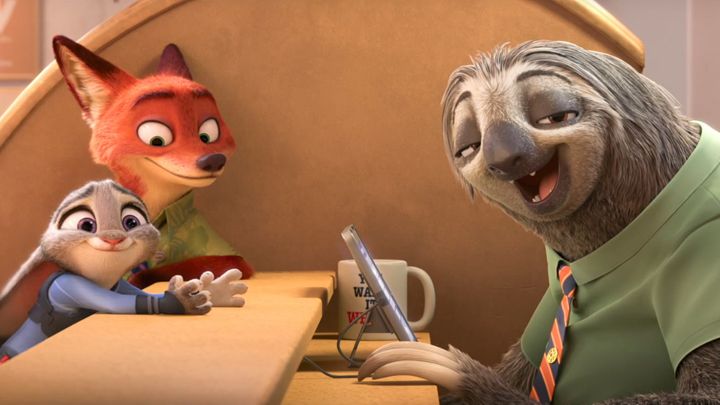
In the film Zootopia, a bunny named Judy Hopps from a small farming town decides to move to the city and become a police officer. The only problem? She’s a rabbit and no rabbit has ever been a cop before.
Even Judy’s parents don’t entirely agree with her dreams. Judy is determined, though, determined to “try everything”, no matter how many times she fails in the process. After a dangerous and convoluted adventure with an unlikely ally, Judy does eventually succeed and prove everyone wrong — a bunny can be a cop.
I often feel like Judy (well, except for the whole bunny part). Growing up, I wanted to be a writer and, like Judy, always had trouble getting others on board with my dream. I’ve always loved reading and writing, but eventually stopped taking it seriously and ended up applying for college with a major in Mechanical Engineering.
It only took a few weeks for me to figure out that I could never spend my entire career as an engineer. The math was extremely challenging for me and I wasn’t interested in most of my coursework the way my classmates were. I was passionate about science, but I realized engineering just wasn’t the right fit.
So I changed my major, which was a step in the right direction but still a bit skewed. I chose Physics, figuring my credits would transfer pretty smoothly. I imagined it would be kind of like Star Trek (pro tip: science fiction is not a good resource for researching your college major).
I found topics like space exploration and astronomy fascinating, but the math only got harder in physics. Applying it to extremely complex topics often left me with a headache and a lack of sleep. That lasted about a year, until my grades started getting progressively worse and my mood went down the drain, too.
It took a while for me to realize, but I was struggling to admit to myself that I wasn’t happy because I was trying to follow someone else’s dream. I worried about what other people would think if I changed majors again, what my parents would say, what my professors would say. Eventually, though, I made the best choice of my college career: I changed my major. Again.
This time I did some actual research and decided to go with Communication Studies. Needless to say, I got plenty of “feedback” from just about everyone in the Western Pennsylvania area: “What happened?”, “Did STEM get too hard for you?”, “You don’t want to be an engineer anymore?”, “Can you even do that?”.
This time I was sure, though — I was finally heading in the right direction. I realized I could be interested in STEM without it being my calling. I’d always been a great writer, especially when it comes to topics that excite me.
I’m passionate about film and literature, too. It’s unconventional working at the crossroads of the arts and sciences, but that allowed me to carve out a unique space for myself bridging both worlds.
So, why Communications? What does being a writer have to do with “the media”, the epicenter of the Communications field? Why not be an English or Writing major?
“The media” is a broad term and tends to refer to the news media, but, since entering the world of communication studies, I’ve realized that “media” refers to far more than most people realize. Media is defined, according to Google, as “ the main means of mass communication (broadcasting, publishing, and the Internet) regarded collectively” or as the plural of “medium”.
So, basically, “the media” is any channel by which we tell and share stories with each other. Sure, sometimes we use it for things like cat videos, but, for the most part, everything from journalism to blogging to screenwriting can fall nicely into “the media”.
In the twenty-first century, the media has allowed us to reach a larger audience than ever before. Over the last few decades, we’ve gained access to the entire world — suddenly we can watch a live soccer match in another timezone, or walk the streets of Rome behind VR glasses, or play a video game with someone hundreds of miles away.
The media, especially the Internet, has ripped down the barriers of hundreds of years of mass communication. While this does present some great opportunities, it also opens the door to a vast array of nasty side-effects, like we’ve seen in both our world and in the world of Judy Hopps’s Zootopia.
The film shows how the news media specifically can be as damaging as it is informative, with power to sway public opinion and create ugly rifts between people.
The media, in my opinion, is like a catalyst — we can use it to spark riveting discussion, spread an inspiring story, or share an intriguing experience, but we can just as easily use it to set off negative reactions with far-reaching consequences. I chose Communication Studies so that I can say I contributed to the former. Which side will you be part of?
*This post was written as part of an assignment for COMM 110 Principles of Media. It was originally published on January 27, 2019 on Medium and updated on April 18, 2023 for improved grammar, spacing, and context.
 STEVIE BONIFIELD
Leave a Reply